The analyst revolution: Unlocking tomorrow’s AI initiatives
How modern organizations eliminate data bottlenecks to gain a competitive advantage
13 min

Introduction
Analysts sit at the forefront of AI-driven decision-making. They’re responsible for transforming raw data into insights that shape strategies, direct investment, and accelerate growth. Yet despite their critical role, analysts remain trapped in outdated workflows, restricted access regimes, and fragmented tooling that prevent them from operating at their full potential.
Luckily, we’re in the beginning stages of an analyst revolution. Research reveals how deeply organizations are losing productivity, talent, and competitive advantage by underinvesting in analysts’ workflows. At the same time, a path forward has emerged, with self-service environments that have built-in guardrails to enable analysts to move quickly without breaking governance.
This report, produced by dbt Labs in partnership with The Harris Poll, draws on a survey of 510 analysts across industries. It explores the current state of analyst work, the systemic risks of inaction, and the transformational opportunities available when organizations empower analysts with AI-ready, governed platforms.
The findings show how these types of self-service environments can unlock a new era of analyst impact, which makes a compelling case for C-suite leaders—empowering analysts with structure and trust is a strategic imperative.
Methodology
dbt Labs partnered with The Harris Poll to conduct a 15-minute online survey from May 28 – June 3, 2025. The survey included 510 respondents in analyst roles, including data analysts, business analysts, quantitative analysts, data specialists, and data scientists. All respondents work with organizational data at companies with 500+ employees across Finance, Healthcare/Pharma, Technology, CPG/Retail, Power & Utilities, and Industrial Manufacturing.
Executive Summary
Our research revealed a workforce caught between rising expectations and outdated systems. Key highlights include:

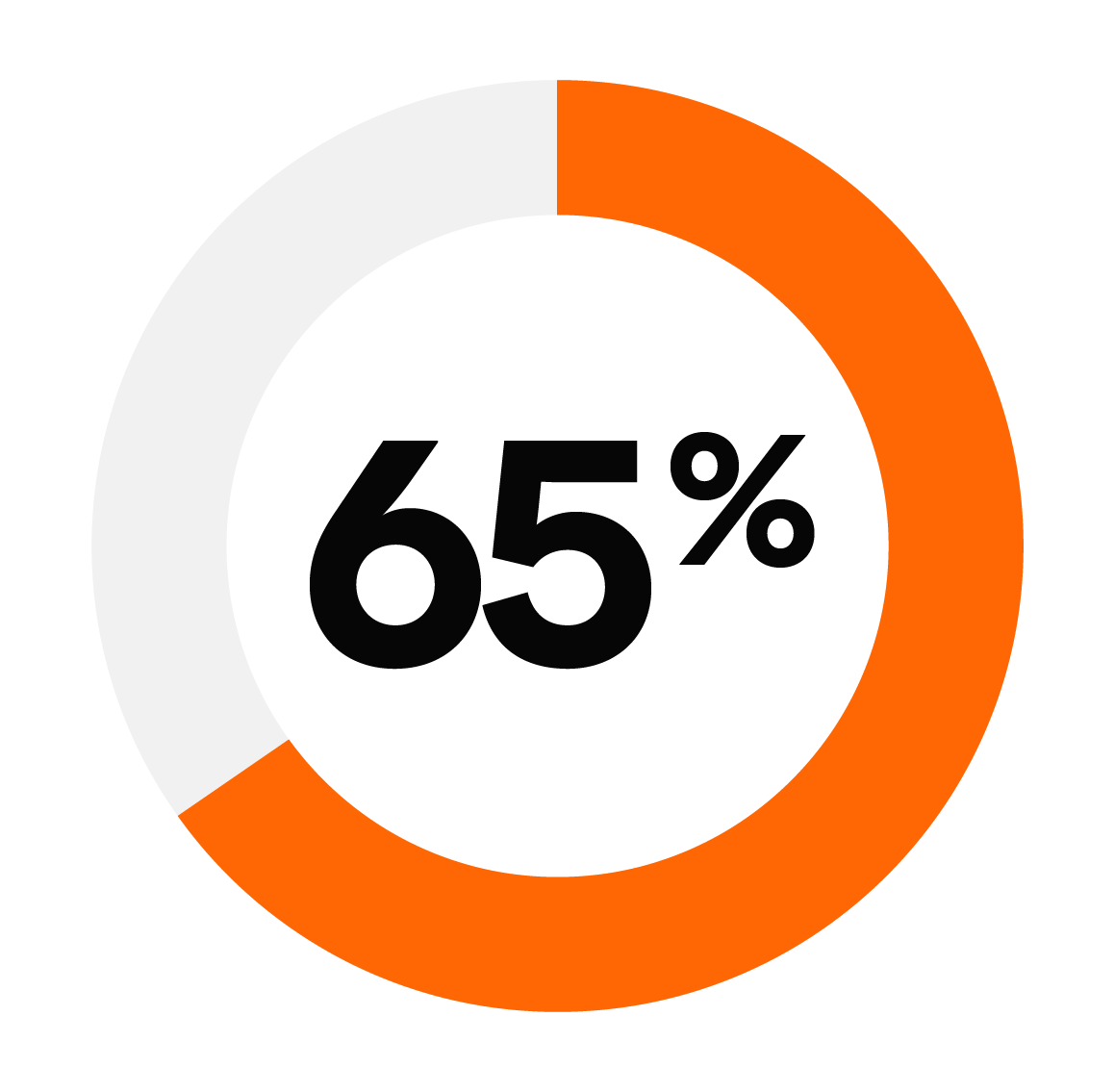
65% report burnout due to fragmented workflows and inefficient tools.

Organizations lose 9.1 hours per analyst per week, equating to $21,613 per analyst per year in wasted productivity.

54% admit to using unapproved AI tools, 40% use personal API keys, and 32% bypass governance entirely.

97% want governed self-service platforms, and 93% believe an all-in-one platform would significantly boost productivity.

96% are more likely to stay with employers who invest in workflow optimization, while 85% would consider leaving if forced to use outdated tools.
The evidence is decisive. Organizations that empower analysts with governed, AI-ready platforms accelerate insight velocity, reduce compliance risks, and become magnets for top talent.
Chapter 1: The great analyst crisis
Analysts love their work—but hate their workflows
Analysts aren’t burned out because they dislike their jobs. Instead, they’re frustrated because their performance is adversely affected by inefficient workflows.

Complex data governance processes often delay timely access to the datasets I need. While these controls are important for security and compliance, they can create bottlenecks, making it difficult to efficiently gather, validate, and analyze data for business-critical projects.
Survey respondent
The result is a paradox. Although 75% report that organizational data is trustworthy and 62% say it is well-governed, analysts spend far more time validating data than analyzing it. Restoring analyst autonomy isn’t just good for morale. It unlocks faster, more confident decision-making across the business.

Across industries, analysts lose 9.1 hours per week to inefficiencies. At a median salary of $95,000, this equates to a $21,613 annual productivity loss per analyst. For a 1,000-analyst enterprise, the hidden tax totals $21.6 million annually. And this is before factoring in delayed insights, slower responses, and reduced agility.
It’s an unnecessary friction that creates a silent drag on business growth. Instead of acting as accelerators of decision-making, analysts are constrained by fractured workflows that dilute their impact.
Chapter 2: The governance gap
Tool sprawl and shadow IT / AI
The adoption of self-service tools was meant to empower analysts. Instead, it created sprawl and introduced new risks.

While these actions may speed up short-term analysis, they undermine governance, creating inconsistent metrics, fragmented workflows, and regulatory exposure. Critically, 63% of analysts acknowledge that working outside governed systems further delays projects, as teams must validate outputs retroactively.
I often have to create workarounds just to access the data I need. It slows down my projects and adds unnecessary risk, but without it, I’d miss deadlines.”
Survey respondent
The C-suite disconnect
Executives demand faster insights, but fail to equip analysts with the necessary tools:

The result is an environment where organizations oscillate between two extremes. Locking down access too tightly, which frustrates analysts and slows agility, or opening the floodgates, which exposes the enterprise to compliance and cost risks. Either choice leaves analysts under-empowered and executives under-served.

This disconnect becomes more obvious when we examine what analysts describe as the “efficiency paradox,” where the tasks most critical to business outcomes are also the most difficult to execute. Equipping analysts with the right tools and access helps organizations move faster, collaborate better, and act on insights when it matters most.
The efficiency paradox
Analysts face a striking imbalance between the importance of their work and the ease with which they can execute it. Survey data shows that while at least 70% rate tasks like maintaining compliance and ensuring accuracy as highly important, only 38–40% find them easy to complete.

This gap highlights a core inefficiency—the responsibilities most critical to business outcomes are also the most difficult to deliver. So instead of driving insights, analysts spend hours validating trusted data or waiting for access approvals.
For executives, the consequences are significant. Bottlenecks in compliance and accuracy checks ripple into delayed projects, hesitant decision-making, and increased risk exposure. The frustration stems not from the importance of these tasks, but from the unnecessary barriers that make them harder than they should be.
These gaps create mounting frustration, but the research also reveals where analysts see the greatest opportunity for change: the integration of AI into governed workflows. Because when analysts are supported by AI-powered tools, they shift from execution to impact, surfacing insights that guide smarter, faster business decisions.
Chapter 3: The AI skills unlock
Analysts want centralized AI-powered, governed workflows
Across industries, AI is lessening the burden of mundane data tasks and improving the ability to focus on work that matters, so it's no surprise that analysts are eager for it to become a central part of their workflows. In addition, there’s overwhelming demand for governed self-service, signaling the need for a central environment where analysts can safely self-serve with standardized access and metrics. The survey results show an overwhelming appetite for an all-in-one, structured, AI-powered platform.

Analysts also have strong opinions on the AI features that will create the most impact. When asked which capabilities would be most valuable in their workflows, they prioritized:

These preferences reveal a desire for speed and trust. Analysts want to spend less time validating datasets and more time guiding decisions with reliable insights. Furthermore, they’ll co-lead an AI-enabled analytics lifecycle, defining use cases, acceptance criteria, and trust signals that make agentic work safe. Their impact moves from writing queries to curating definitions, monitoring outcomes, and guiding strategy with explainable results.
From confidence gaps to future readiness
Today, analysts feel the weight of governance bottlenecks and inefficient workflows, but they also recognize the potential of AI to close those gaps. Analysts see AI as an enabler, not a threat.
The research shows that:

This signals a shift in the very nature of the analyst role. Analysts are preparing to become data strategists rather than data wranglers, relying on AI to automate repetitive mechanics while they focus on higher-order business impact.
The technical unlock: From code to conversation
Analysts envision a future where prompting replaces manual coding. This isn’t about eliminating skill, but multiplying impact. Analysts will spend less time writing SQL and more time interpreting results, collaborating with stakeholders, and shaping organizational strategy.

The AI unlock, then, is not theoretical. It’s a business imperative already visible in how analysts view their work today and anticipate their role tomorrow. Organizations that fail to invest in governed, AI-powered platforms risk leaving their most strategic minds stuck in manual workflows, while competitors accelerate with speed, trust, and scale.
Chapter 4: The multiplier effect
Business outcomes of governed self-service
Empowering analysts with governed autonomy benefits productivity, governance, and talent retention.

Governed self-service transforms analysts into data-driven decision-making accelerators. By eliminating tool fatigue and ensuring access to datasets and metrics standardized by the data team through a centrally governed self-service model, organizations increase insight velocity, improve compliance confidence, and reduce redundant work.
The retention unlock
The stakes for talent retention are high. Analysts are transparent about what keeps them engaged and what pushes them away:

These numbers reveal more than employee preferences. They point to the foundations of organizational competitiveness. When workflows are outdated, analysts disengage, productivity slows, and attrition risk rises. For leaders, that means not only replacement costs, but also the loss of institutional knowledge and momentum on critical data initiatives.
The survey also highlights how analysts expect the adoption of modern platforms to impact their employment. With better tooling:

Together, these findings show that analysts tie modern workflows to both efficiency and to the quality and reliability of the insights they deliver. Improvements in data consistency reduce rework and conflicting metrics across teams, while greater job satisfaction strengthens retention and engagement.
For executives, this means investments in workflow optimization don’t just speed up analysis. They directly improve the accuracy of decisions and the stability of the workforce delivering them. Retention, then, becomes a leading indicator of competitive advantage: organizations that invest in governed self-service are not only equipping analysts to do better work, they are positioning themselves as talent magnets in a highly competitive labor market.

Chapter 5: The path forward
The report clearly illustrates that analysts aren’t asking for less governance or unchecked autonomy. Rather, they’re asking for a new model, one where governed self-service gives them the ability to move quickly, responsibly, and at scale, all in one place. This isn’t just a workflow upgrade. It’s an urgent and unavoidable shift in how organizations think about data, talent, and competitive advantage.
For executives, the mandate is simple. Empower analysts to operate at their full potential. This means removing the inefficiencies that waste millions in lost productivity, closing the governance gaps that drive risky workarounds, and investing in centrally governed, AI-enabled platforms that elevate analysts from data processors to strategic advisors driving tomorrow's AI initiatives for the business.
The analyst revolution is here. Organizations that act now will improve insight velocity and data quality, while also becoming magnets for top talent. Those that delay will fall behind. The choice is stark—remain trapped in busywork, or unleash analysts as the innovators who will define the AI era.
Analysts are ready to lead the next era of business transformation. The question is whether organizations will empower them with the structure they need to succeed.
Download: The analyst revolution: Unlocking tomorrow's AI initiatives
VS Code Extension
The free dbt VS Code extension is the best way to develop locally in dbt.